电 话:+86-18853383188
邮 箱:691065898@qq.com
地 址:No. 12 Taimei Road, High tech Zone, Zibo City, Shandong Province
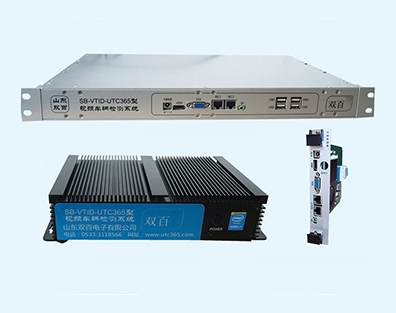
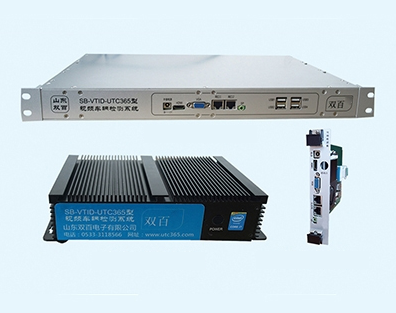
The video vehicle detection system consists of a camera (available camera resources such as intersection electronic police), a video vehicle detector host, and configuration software.
This scheme utilizes video vehicle detectors to monitor the real-time traffic flow at various intersections, road sections, and areas, and upload it to the signal in real time.
1) Real time data signal machines can achieve functions such as single point induction control and single point adaptive control.
2) Multiple intersections within the region can be processed through the big data control platform to upload video traffic data, and combined with the upper computer algorithm to control the traffic signals within the region to achieve regional coordination.
3) It can achieve the function of line coordination induction (sensing green wave bands).
System advantages
Convenient installation, no need for rewiring construction, can borrow intersection electrical police and checkpoint resources, without affecting the work of electrical police and checkpoint cameras, integrating resources, and saving funds.
No relay equipment is required, and the video vehicle detection host, camera, and signal are communicating within the same local area network.
It can measure information such as vehicle speed (instantaneous speed, average speed) and time occupancy at intersections.
L can achieve local storage of traffic flow data, data upload does not rely on signal machines, can be installed independently at intersections, and has functions such as judging congestion status at intersections
The detection rate is as high as 99.3%.
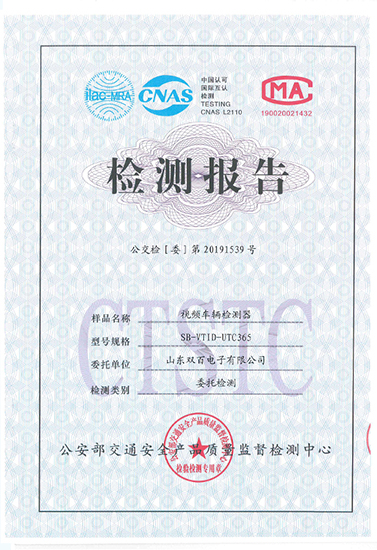
Passed the inspection by the Traffic Safety Product Quality Supervision and Testing Center of the Ministry of Public Security.
Main features of our company's video vehicle detector
Utilizing intersection cameras to assist with code stream image acquisition for vehicle analysis, without the need to lay any cables or add related hardware equipment.
The collection of information is large, accurate, intuitive and reliable, and the detection area can be flexibly set according to needs. The reflection of road conditions is intuitive.

Setting interface
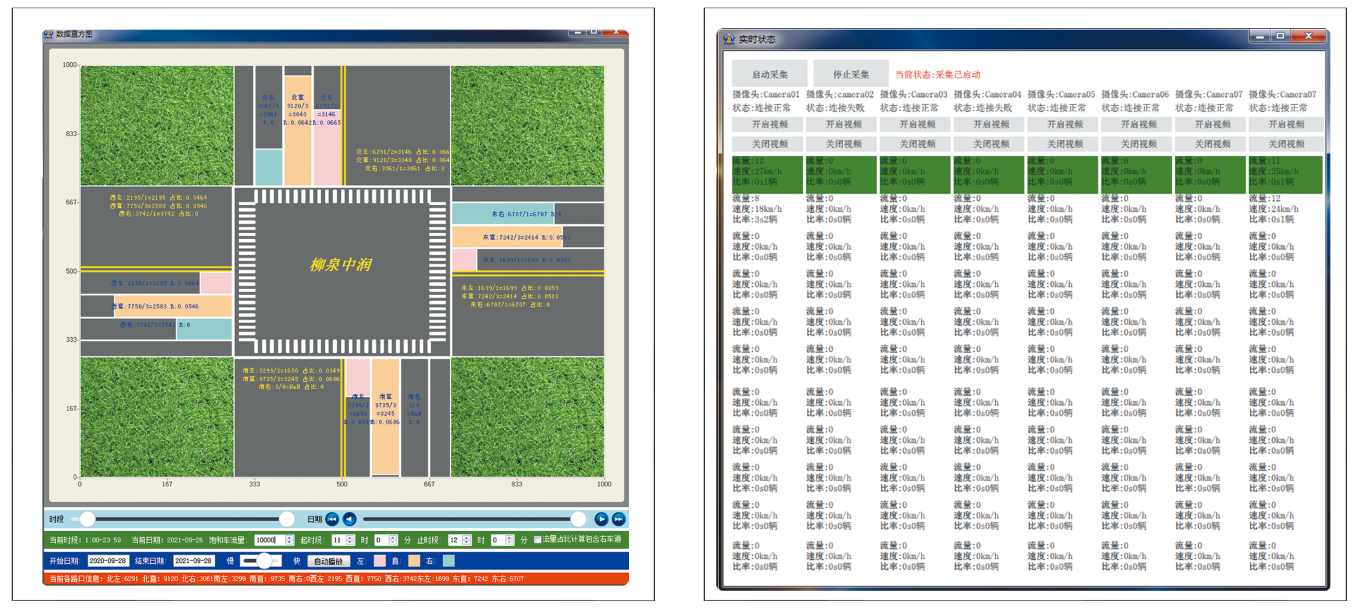
Histogram Query Real Time Status
System control strategy
The following control strategies can be achieved by utilizing traffic data and other information detected by the video vehicle detection system.
1) Single point induction control
When the traffic conditions at intersections with single point control change frequently and irregularly, single point induction control can be used; The control mode is more effective at intersections with large and varying traffic flow, and intersections with significant differences in traffic flow from different directions, when the randomness of traffic flow is strong.
The green light time of each phase is determined by the traffic flow in each direction, but each phase has limited conditions such as small green light time and large green light time, as well as the number of steps. This can reduce the idle time in the direction without vehicles, thereby increasing the traffic efficiency of the intersection.
2) Single point adaptive control
The signal machine calculates the traffic load at the intersection based on the traffic information detected by the video detector, including traffic flow, time occupancy, etc., and optimizes the control cycle and green signal ratio of the signal machine. Adaptive control can be optimized based on the queue length set by the signal, real-time phase traffic intensity (parameters that reflect the traffic status of the intersection), and the green signal ratio is calculated based on the smoothness value of the lane flow of the video detector.
When the traffic intensity is less than the critical value of the single point optimization control method corresponding to the current number of critical phases, the cycle duration corresponding to the current number of critical phases is adopted. Utilize real-time generated optimization schemes to correct historical optimization schemes and store the correction results in the signal machine.
3) Line coordination induction control (induction green wave band)
Green Wave Control: Coordinates the timing of signals at adjacent intersections on a mainline, so that most vehicles pass through one intersection with a green light and reach the next intersection with a green light. It allows for unobstructed passage through the mainline without waiting for red lights, reducing travel time.
Induction Green Wave Band: By adding induction control to the green wave band, the idle time of non coordinated phases is added to the coordinated phase through video detector data, increasing the green signal ratio of the main line and further improving the traffic efficiency of the main line.
4) Regional coordination and control
Regional coordination control unifies several network intersections with strong correlation and implements a centralized management and control mode of mutual coordination.
Regional coordination control takes all signal controlled intersections in a certain area as the object of coordination control, unifies the coordination of signal period, phase difference, and green signal ratio, and improves the traffic capacity of the road network. Regional coordination control is a traffic signal control method. Each controlled traffic signal within the control area is centrally controlled by the traffic control center (big data control platform), and its control basis is still based on data from the video vehicle detection system.
5) Signal vehicle detector processing motherboard
The signal vehicle detector processing motherboard and the video vehicle detector receiving host communicate through the router network port.
The signal vehicle detector processing motherboard only requires a network cable to be connected to the router, without the need for wiring.
Internal communication port of the video vehicle detector receiving host: 192.168.0.100:3389
The video vehicle detector is suitable for the following applications:
Collect traffic information such as traffic flow, occupancy rate, queue length, and speed at urban traffic intersections and highway gates;
L Parking lot automatic control
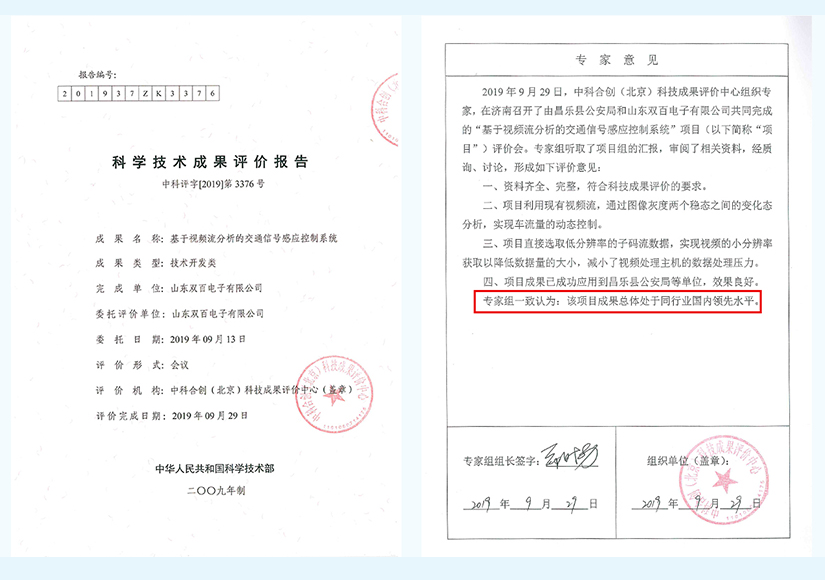
Video Vehicle Detector Detection Report