

Tel:+86-18853383188
Email:691065898@qq.com
Address:No. 12 Taimei Road, High tech Zone, Zibo City, Shandong Province
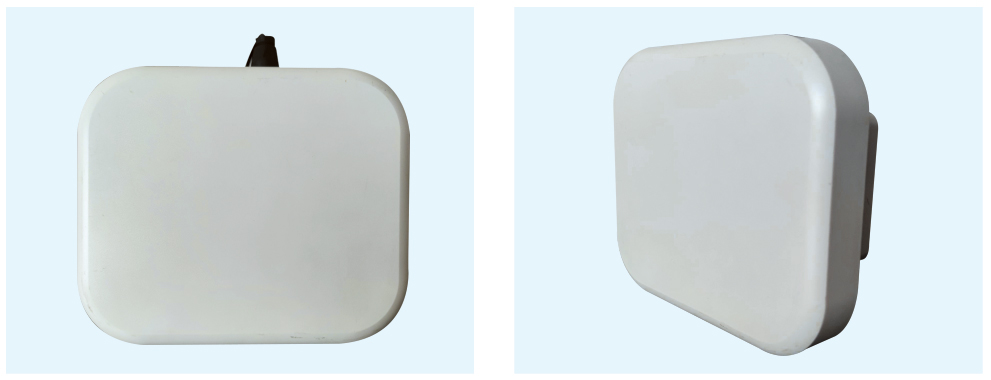
Radar vehicle detector refers to a device that identifies vehicles by emitting microwaves into the road surface and receiving reflected waves. According to the principle of Doppler effect, a detector suspended at a certain distance above the lane emits a known frequency microwave beam and receives reflected waves towards the lane below. The vehicle is identified by the frequency difference between the emitted and reflected waves.
The generation of radio frequency electromagnetic waves relies on a specially designed solid-state resonant cavity. Although radar waves have high frequencies and short wavelengths, they also follow the propagation laws of waves, which include incidence, reflection, refraction, and decay. People use these characteristics to serve the quality monitoring and status detection of highway engineering, meeting the requirements of non-destructive, fast, and high-precision detection.
Radar vehicle detectors are mainly used in park and company vehicle entrances and exits, highway entrances and exits, and parking lot management, replacing existing ground sensing coils, controlling the lowering function of the brake lever, and preventing accidents such as "smashing cars" and "smashing people" caused by the brake lever. The radar vehicle detector has the advantages of easy installation and maintenance, no need to damage the road surface, no impact on vehicle access, advanced technology, low cost, flexible setting of operating distance, all day and all weather operation, and adaptability to barrier gate poles.
Specific advantages:
1: High cost-effectiveness operation: Radar ground sensing has strong adaptability to the environment, and its detection performance is not affected by external environmental interference such as light, dust, rain, and snow. Easy installation and maintenance, requiring less manpower, short working hours, and long service life.
2: High detection accuracy: radar ground sensing detection with low false triggering rate, effectively filtering false triggering targets.
3: Installation without breaking the road: The installation of the radar ground sensor does not require cutting the road surface, and the anti impact radar is directly installed on the road gate box, making installation convenient and easy to debug, avoiding problems such as damaging the ground and hindering the normal use of the parking lot, effectively solving the shortcomings of traditional parking lots.
4: Debugging and maintenance are simpler: As a non-contact detector, radar vehicle detectors have different working principles and methods from contact type detectors. In the later maintenance process, the faulty radar only needs to be replaced to ensure that the entire system can resume normal operation, with short time consumption and greatly reduced labor costs. In contrast, after a coil malfunctions, the faulty coil needs to be excavated from its original foundation, then re cut and buried, which is a very complicated process. The economic losses during this period have brought potential cost expenditures, greatly increasing maintenance costs.